Growth Thinking

This is the fourth in a four-part series diving deeper into the growth capability gaps we introduced in our article The Business Growth Capability Gap That Engineering Firms Face. Each article explores one of the four critical systems. (The first is here, the second is here, and the third is here).
This article looks at something that happens before you even get a chance to show an interested prospect what you’re capable of: the impression you make on them before you ever get to talk to them or meet them.
A strong First Impression system is CRITICAL because it determines whether you even get on a long list, let alone receive an enquiry.
Their first encounter is a ‘make or break’ sales moment that happens before they make that call or send the email. Is that out of your control? Not at all!
All buyers are connected to a vast searchable global information repository (aka ‘The Internet’) and you’d better believe they use it! Prospects research you online before they decide whether to reach out; in fact data suggests 95% of buying groups rank vendors by researching them online, and 60% of the decision is made before you hear from them. (Source)

Clearly, what they find in your digital presence either reinforces why they should work with you, or it triggers doubt — meaning your website, your LinkedIn, your case studies, the way you show up online is doing the selling (or the underselling) before you get to utter a word. Even if a prospect gets referred to you, before picking up the phone, they do what everyone does now—they Google you.
Yet most engineering firms treat their digital presence like an afterthought. Something that exists, but doesn’t require serious attention.
When a prospect researches you, they can’t find reasons to select you. Your team’s credentials aren’t visible. Your positioning isn’t clear. The website was built a few years ago no longer captures what you do. Nobody updates LinkedIn. Case studies are generic project descriptions without proof points or good photographs. Nobody has thought strategically about what a prospect actually sees when they research you.
The prospect thinks: “This firm’s digital presence doesn’t match the description I got. Are they really as capable as the referrer said? Or is that person being generous?”
And sometimes they don’t risk it. They call someone else instead.
You’ve just lost a deal. Before you even knew it was a possibility.
We see this all the time where there’s no systematic approach to:
This isn’t a criticism — most engineering firms excel at delivery. But translating that capability into a professional digital presence that actually sells is rarely approached systematically.
Here’s what happens with firms that do have a strong first Impression system: when a prospect researches them online, they see evidence of scale, capability, and professionalism that matches the referral they received. They immediately understand what the firm is known for. They can visualise previous projects and outcomes. They ‘re impressed enough to pick up the phone. And the conversation starts with momentum instead of skepticism.
Another trap of poor First Impression systems: you haven’t controlled the narrative. A prospect researches you and creates their own mental story about who you are based on what they find (or don’t find) online. Maybe they think you’re smaller than you actually are. Maybe they think you’re commodity-priced when you’re actually premium. Maybe they can’t figure out what makes you different so they assume you’re like everyone else.
Compare that to firms that have systematized their First Impression. When a prospect lands on their website, it’s immediately clear what they do, who they serve, and why they’re different. Their case studies tell real stories with real outcomes. Their team profiles show genuine expertise. Their imagery and language reflect the caliber of work they deliver. Everything reinforces the same message: this is a capable, professional, differentiated firm.
So when the prospect does call, they’re calling with confidence. They already know they want to work with you. The conversation starts at a different level.

Engineering firms that scale past the $10-15M plateau have one thing in common – they’ve built a powerful First Impression system. This doesn’t happen by accident. It’s about three interconnected things working together:
None of this requires a large marketing team. It does require intentionality and investment.
Too many engineering firms got a website built years ago, update it occasionally, and hope it works.
Firms that scale understand their digital presence is a sales tool rather than a ‘nice to have’ and enjoy healthier reputations, fatter pipelines and convert more referrals into conversations.
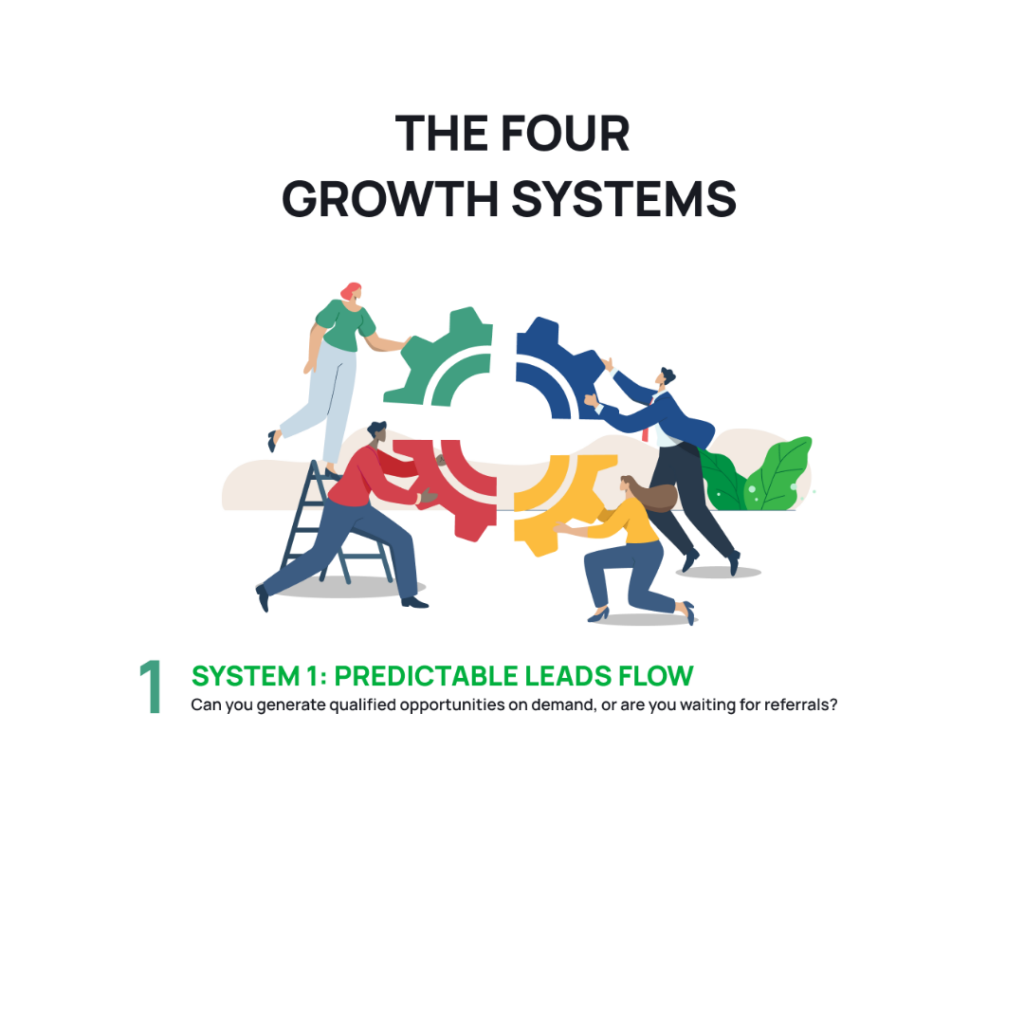
Across this four-part series, we’ve explored the four critical systems engineering firms need to scale beyond founder-dependent growth:
Most engineering firms have one or two of these systems partially built. Almost none have all four operating systematically. That’s the gap. And it’s what constrains scaling.
We’ve built an online self-diagnostic tool specifically for engineering firms wanting to identify and close their growth capability gap.
It takes about 10 minutes and evaluates your business against the four growth capability systems. You’ll receive a personalised report showing where you have strong growth capability and where critical system gaps exist. More importantly, you’ll understand to what degree this is actually constraining your growth.
InsideOut Group works with engineering and technical businesses developing the growth capability required to scale beyond founder-dependent models without making big investments.
If you’d rather have a discussion about what building these systems would involve for your specific situation, book a 30-minute diagnostic call with Rick Merten.